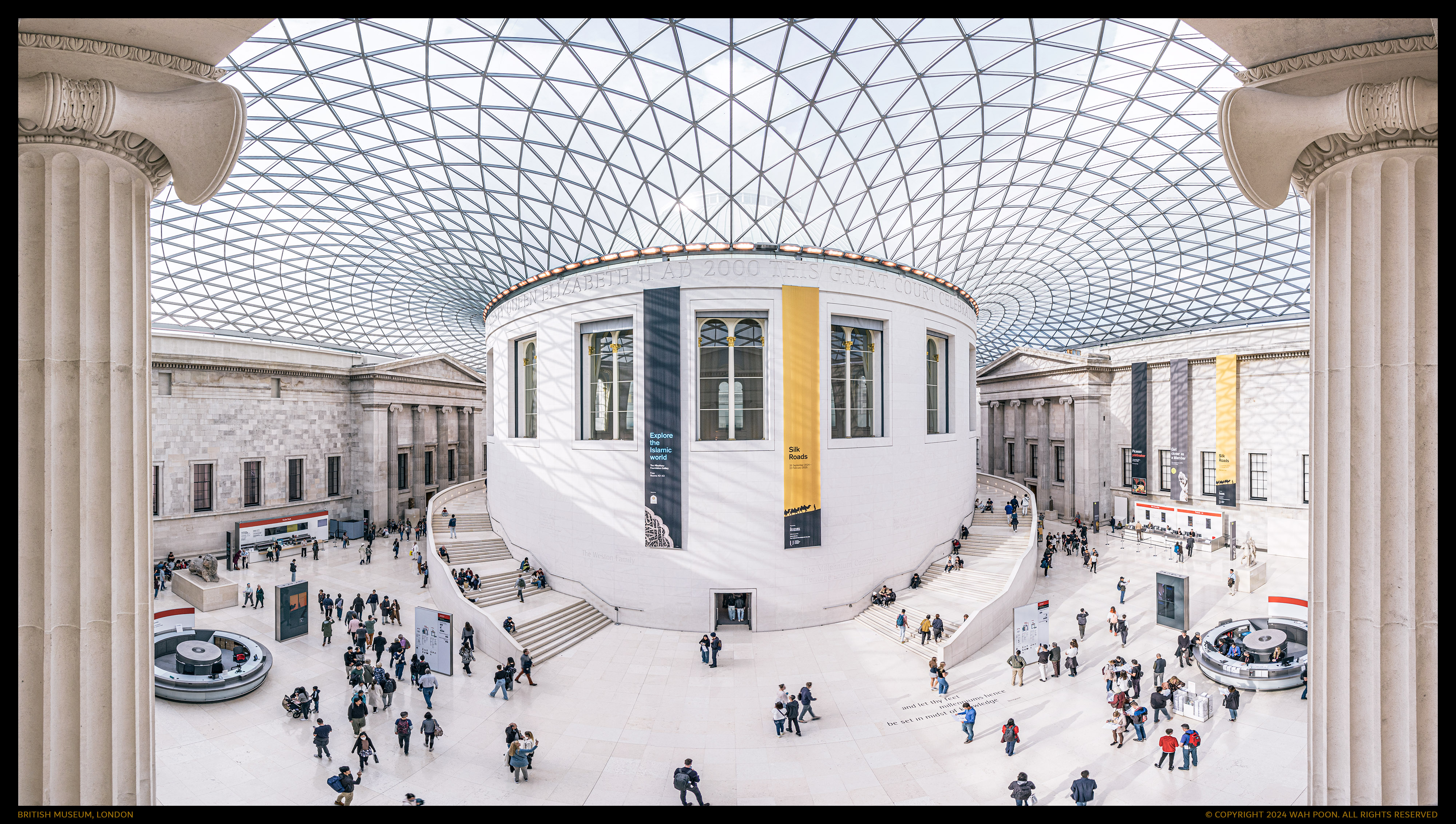
London: The Sedimentary City
Roman chalk beneath Victorian brick and modern glass.
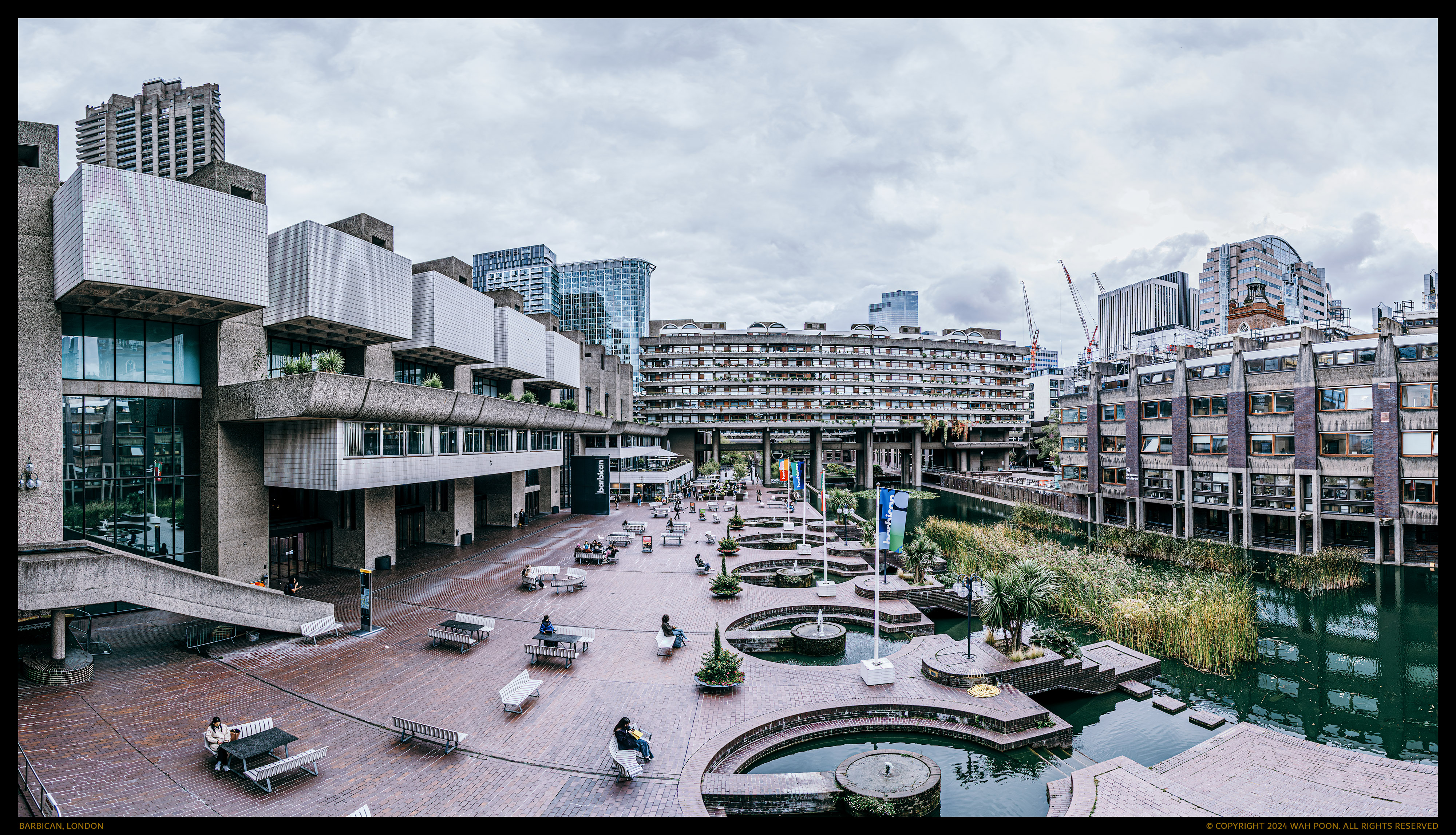
The human eye does not see in a rectangle. Our total horizontal field of view spans roughly 200 degrees, a vast, immersive panorama that we mentally stitch together through rapid eye movements called saccades. PANO220 seeks to capture that sweeping visual expanse in a single exposure. By employing specialized ultra‑wide optics to seize a panoramic vista, we step beyond the "window" of traditional photography and enter the "room" of the scene itself. It is a way of seeing that prioritizes context over isolation.
Why a broader vista? Most commercial panoramic tools stop at 120 or 150 degrees, often relying on multi-shot stitching that blurs the living, breathing motion of a city into a ghostly smear. We capture the entire field of view in a single, frozen instant. This technique reveals the friction between the subjects and their environment—from the geological sediment of London's architecture to the sheer vertical compression of Hong Kong.
Our work focuses on the urban complexity of five distinct metropolises. Each location represents a different architectural and social experiment, captured through the logic of the wide frame.
Roman chalk beneath Victorian brick and modern glass.
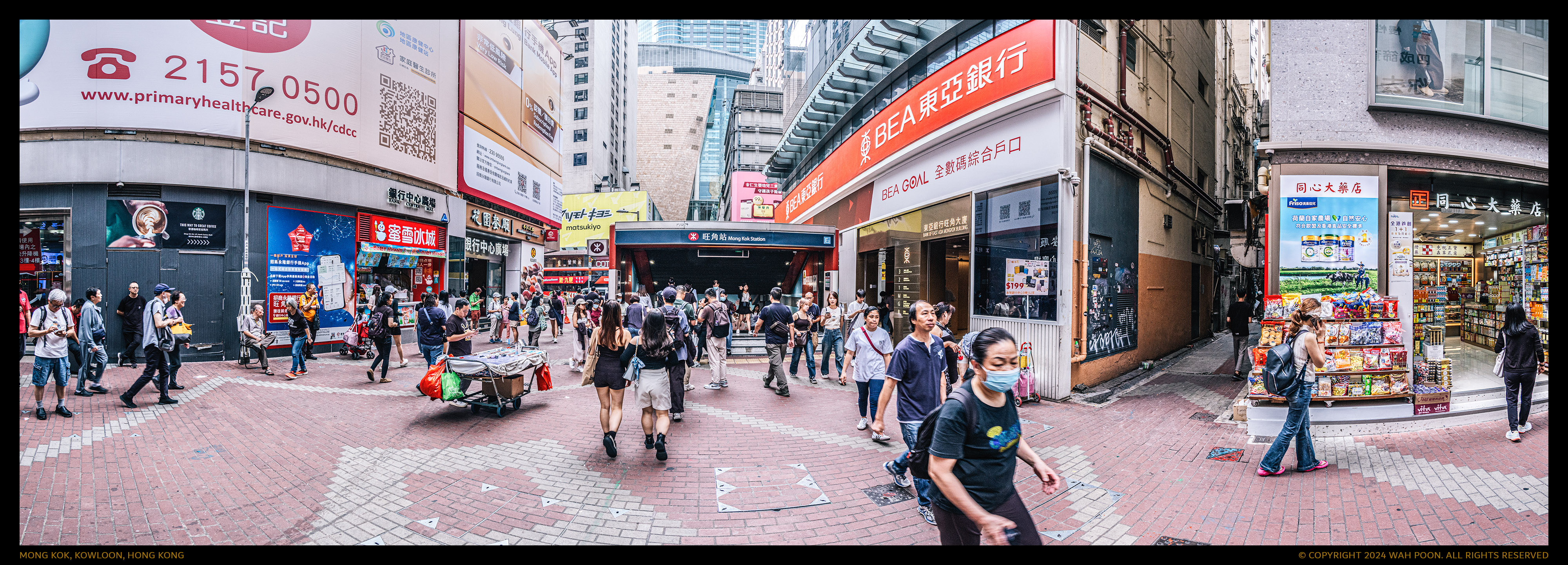
A city of 7 million people constrained by granite peaks.

Where 7th-century wood meets 21st-century steel.
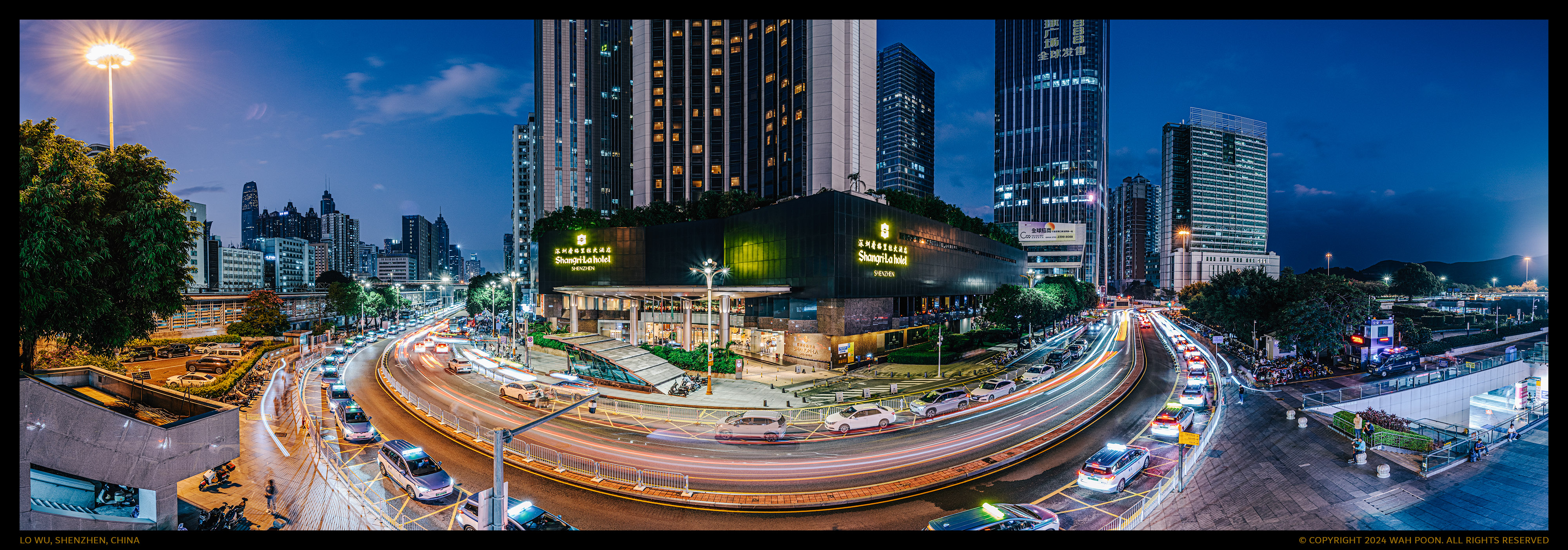
A megacity built on a 40-year deadline.
Understanding the expanded perception
Read the Editorial