Hong Kong: Vertical Density
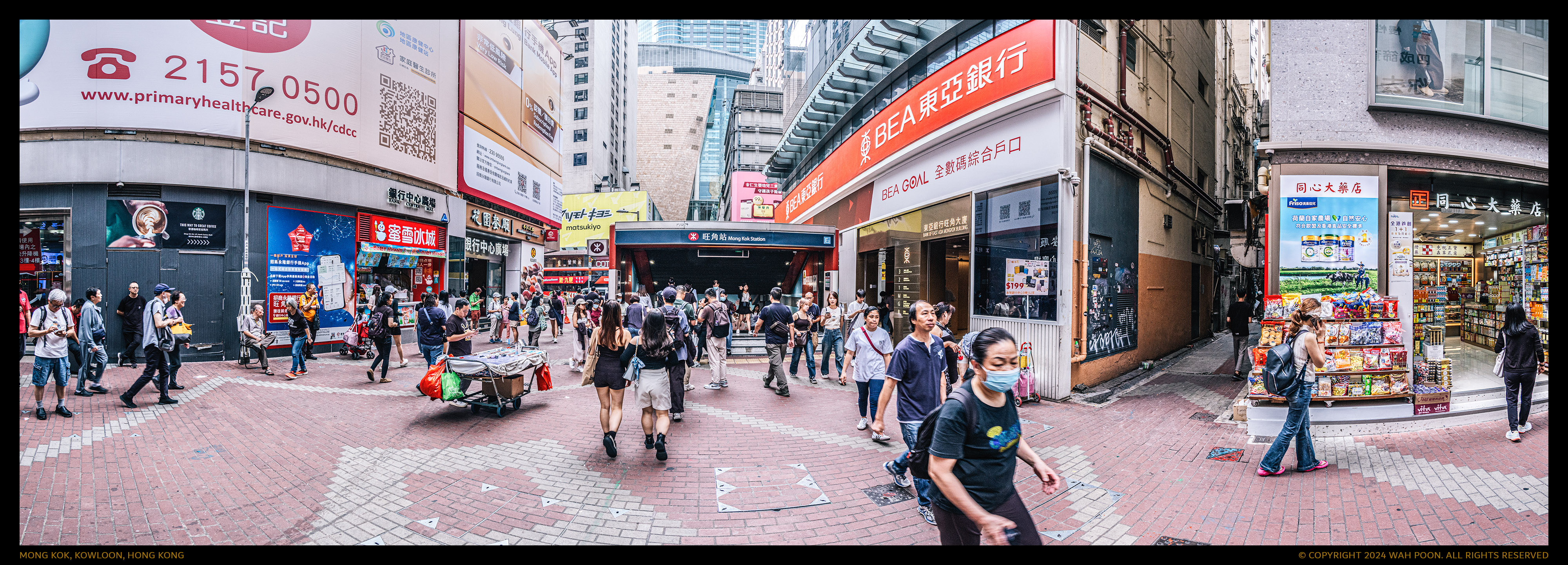
Hong Kong is a city defined by its topography. With 75% of its land covered by steep, granite hills, the metropolis had nowhere to go but up. The result is a "vertical urbanism" where the boundaries between public and private space are erased by sheer necessity. A standard lens captures a single, impressive tower; a expanse panorama captures the "canyon effect" — the way buildings lean toward one another, connected by a web of aerial walkways and draped in a multi-colored lexicon of neon signage.
We shot in November, when the humidity of the subtropical summer finally breaks. The air becomes clearer, allowing the distant peaks of the New Territories to emerge as a backdrop to the urban density. The city is often described as a "lens" itself — a place where the pressure of the environment forces a specific kind of human behavior. The wide frame shows this pressure: the way every square inch of a facade is utilized for storage, cooling, or advertisement, creating a "bricolage" aesthetic that is uniquely Hong Kong.
Mong Kok and the "Goldfish Bowl"
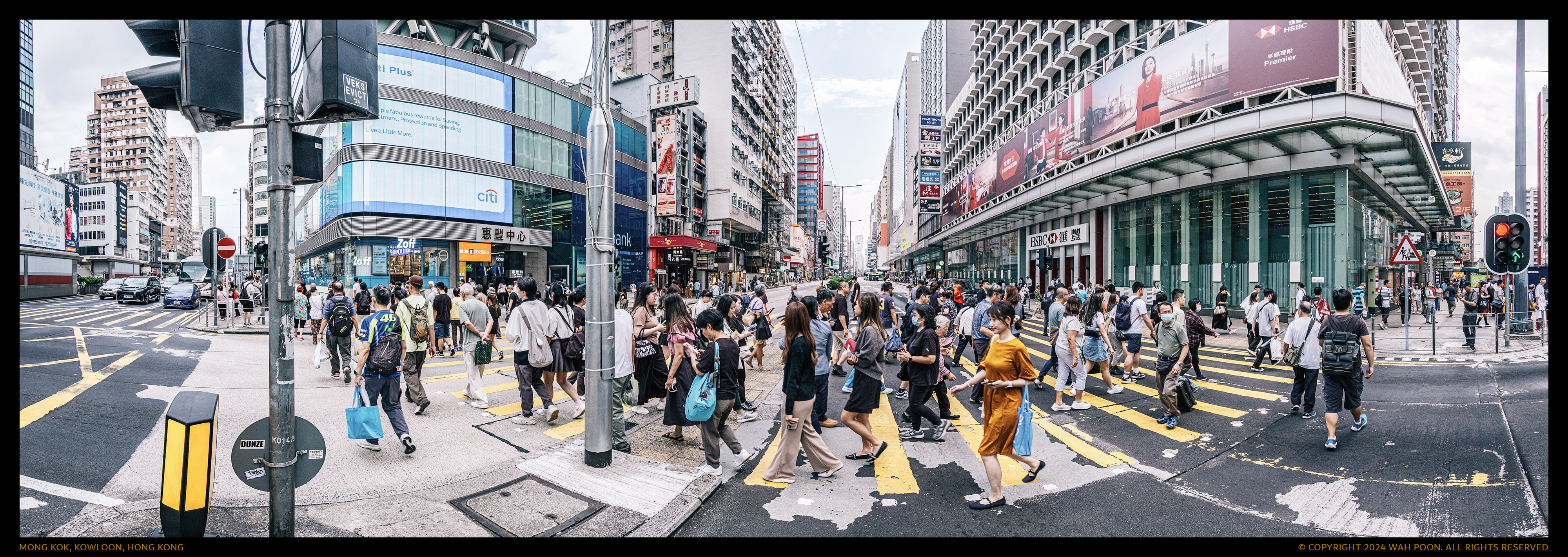
Mong Kok has some of the highest population densities in the world. In a expanse frame, the district feels like a high-tech canyon. The "goldfish bowl" effect — the sensation of being watched from thousands of windows — is a direct result of the architecture. The panorama captures the "Tong Lau" (tenement buildings) with their weathered balconies and hanging laundry, sitting in the shadow of the sleek, air-conditioned glass of the new luxury developments. It is a city of "micro-living" on a macro scale.
Causeway Bay and the Colonial Grid
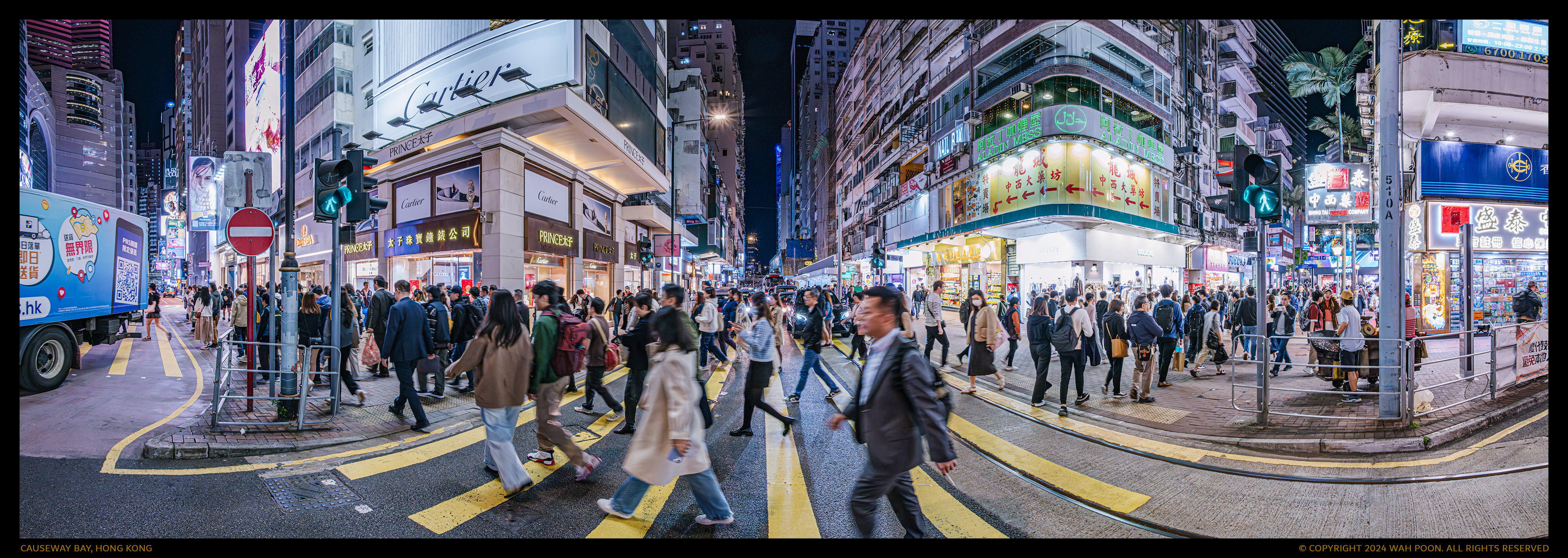
Causeway Bay was once a bustling harbor; today, it is a dense grid of department stores and street markets. The expanse view reveals the "street wall" — the uninterrupted line of commercial activity that defines the Kowloon and Hong Kong Island shorelines. The wide angle also captures the "typhoon shelters" and the remnants of the city's maritime history, which are often cropped out of standard travel photography in favor of the more glamorous skyline.
Happy Valley provides the city's most dramatic "horizontal void." The racetrack, originally created by draining a malarial swamp, is a green lung in a city of concrete. From the expanse perspective, the track acts as a visual break, a deliberate pause in the city's relentless vertical climb toward the Victoria Peak.
Technical Note
Hong Kong panoramas were shot in November 2024. The high-contrast neon lighting required exposure bracketing at 2-stop intervals, merged manually to preserve shadow detail in street-level markets and highlight detail in illuminated signage.